Overflowing drains and foul air expose residents to health risks amid civic neglect.
Chandigarh: Overflowing sewerage drains, polluted air and foul-smelling surroundings have become a grim reality for residents of Chandigarh, raising serious public health concerns and drawing attention to what locals describe as persistent civic negligence by the Municipal Corporation.
Watch Video Short on Youtube: Chandigarh Sewerage Crisis Raises Health Concerns in Sector 15 Green Belt
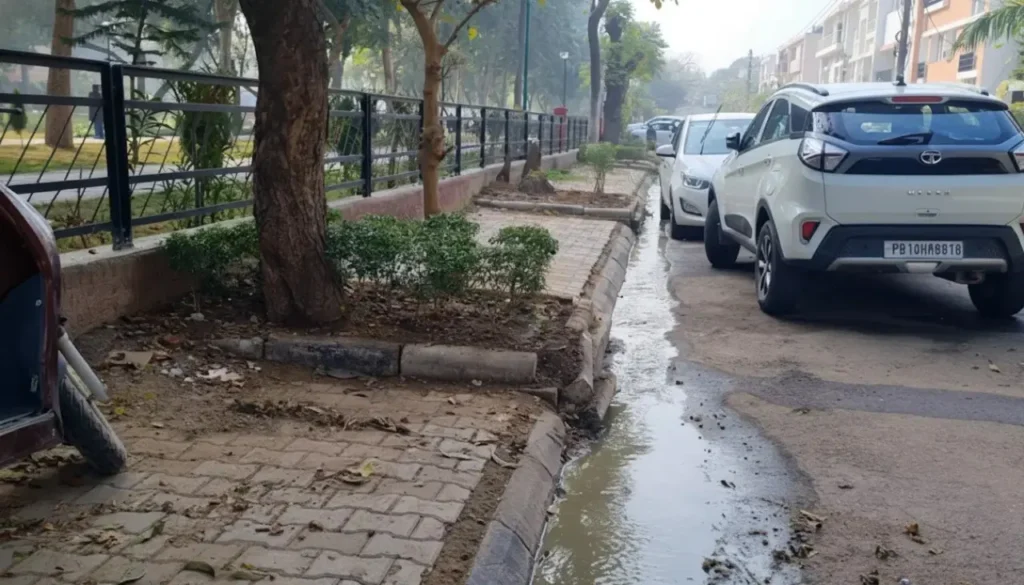
In the Sector 15 Green Belt, sewerage gutters constructed in what was once a pristine public space are now reflecting a deteriorating urban environment. Several sewerage drains have remained clogged for months, resulting in dirty water and sludge overflowing into green areas and nearby roads. The situation has forced residents to breathe polluted and toxic air on a daily basis.
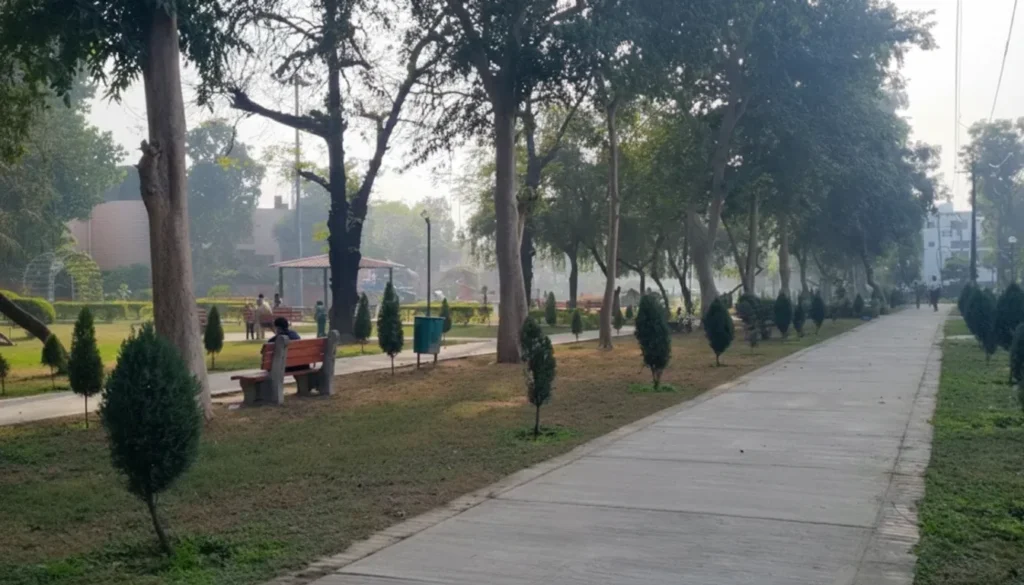
Morning walkers, senior citizens spending time in parks, and children at play are all being exposed to unhygienic conditions. What was once considered a healthy activity has now become a potential health hazard, as the stench and contamination continue unabated.
Residents state that the Chandigarh sewerage crisis is not due to a lack of funds but stems from what they term a “grossly negligent working style” of the Municipal Corporation. Despite regular collection of various civic taxes from citizens, they allege that the return has been overflowing sewage, unbearable foul odor and an increasing risk of disease.

According to local accounts, whenever one sewerage drain is opened or cleared, another nearby drain begins to overflow. The contaminated water flows through streets and lanes, polluting the entire environment. In cases where the main sewer line gets blocked, sewage reportedly enters residential houses directly, leading to choked domestic sewerage lines and damage to property.
Residents question whether these conditions align with Chandigarh’s long-held identity as “The City Beautiful.” Conceived after the trauma of Partition, Chandigarh was envisioned as a symbol of modern planning, discipline and efficient administration.
“When Chandigarh remained under direct administrative control, it was not just a city but a model for the nation,” locals recall. “Today, the same city appears to be sinking into silence marked by filth, blocked sewers and foul smells.”
With growing population pressures and expanding civic responsibilities, residents argue that the city was created to showcase what a clean, modern and disciplined urban centre should look like—not to be reduced to a neglected political vote bank.
Since the introduction of the Municipal Corporation system, citizens claim that Chandigarh’s cleanliness and aesthetic appeal are under threat, with dark clouds looming over the future of its public health and civic order.