A concerned veteran questions the rising politicization of the military and demands concrete policy changes to protect the dignity of soldiers.
Chandigarh: (Santosh Gupta) A worrying trend has emerged within the Indian military recently. Senior officers are increasingly securing post-retirement political jobs. Consequently, this shift threatens the core values of the uniform. Trust and institutional respect are deeply at stake.
The military must always remain subordinate to constitutional political power. However, the uniform should never become a simple stepping stone for political office. Currently, political parties frequently offer senior officers top roles without a mandatory cooling-off period. These roles include positions as politicians, Governors, or corporate heads. Therefore, the strict line between military service and political patronage becomes heavily blurred.
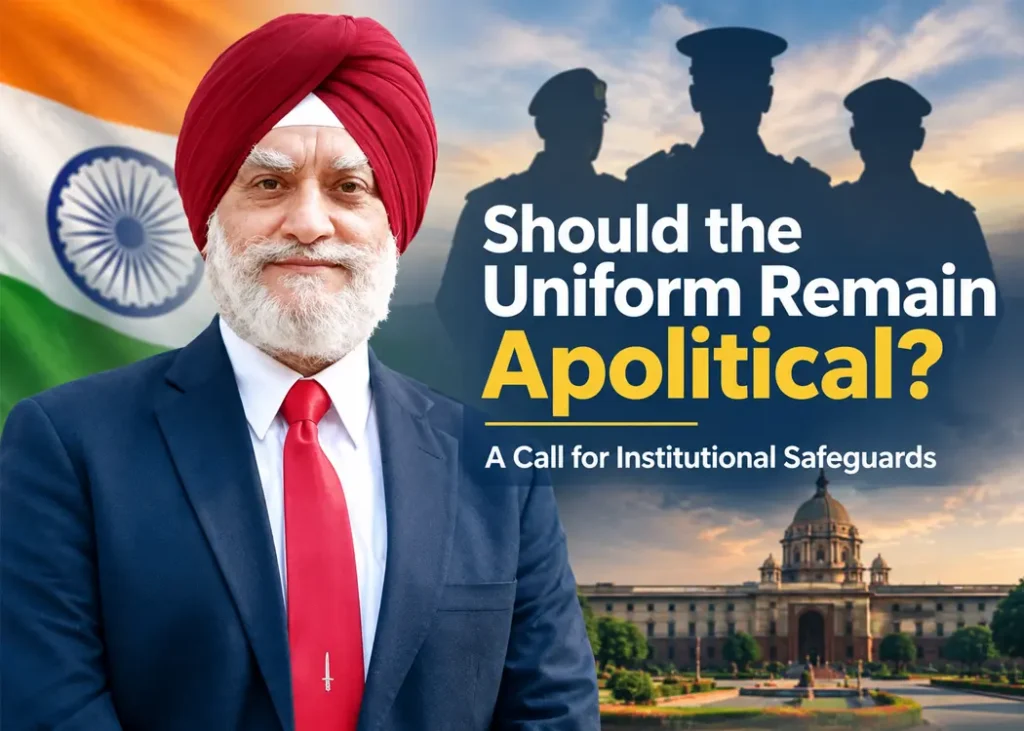
Lt Col Gurprakash Singh Virk recently highlighted these deep concerns in a public appeal. He actively questioned the historical silence of military leadership regarding veteran welfare. “Had the military leadership consistently defended the institution… would India have remained a mute spectator to the 50% pension cut in 1973?” he asked. Moreover, he pointed out the ongoing injustice faced by SSCOs. Veterans are repeatedly forced to protest at Jantar Mantar just to be heard.
Meanwhile, the new ‘Agniveer’ scheme has turned military service into a highly political issue. Words like ‘Agni’ and ‘Veer’ cannot replace true respect and a meaningful social contract. Furthermore, institutional trust breaks when governments intentionally delay favorable verdicts by the Armed Forces Tribunal.
Consequently, Gen Z must ask a crucial question today. Is the military still an apolitical institution? Or is it slowly becoming an extension of political influence? According to Virk, the answer must lie in robust institutional safeguards rather than political dependence.
India urgently needs a comprehensive Armed Forces Welfare and Resettlement Act. This proposed law must cover the Army, Navy, and Air Force equally. In addition, the country requires a separate Military Pay Commission. A soldier’s solemn oath to the Constitution does not end with retirement.
Furthermore, the armed forces community should consider seeking a more direct constitutional presence in legislatures. Ultimately, the nation must decide if the uniform deserves genuine representation and protection, rather than just token respect.